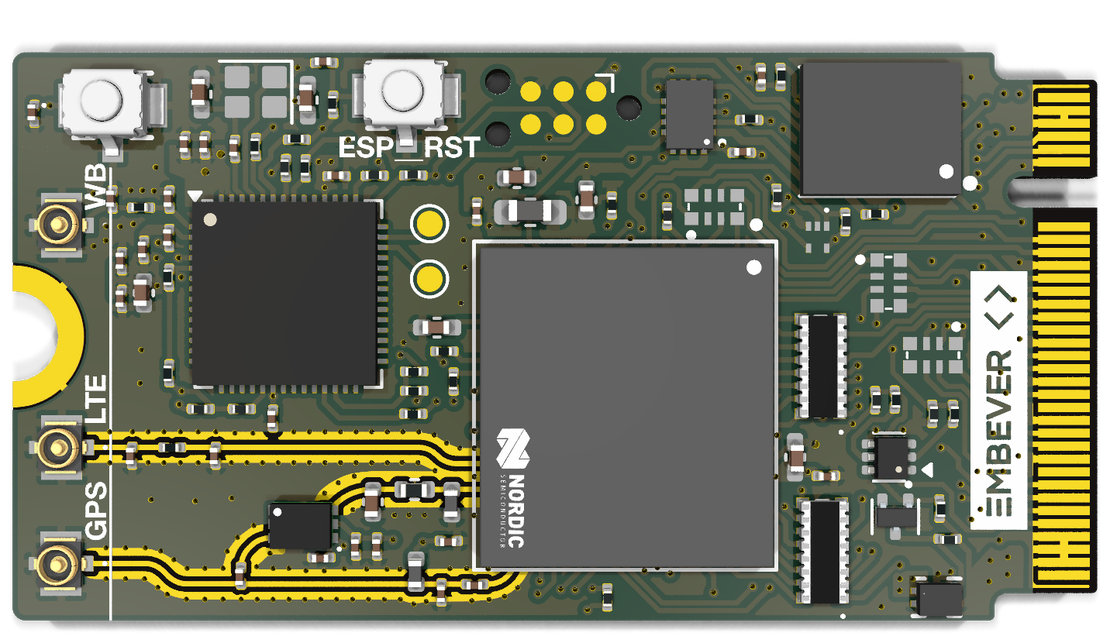
CaaM.2 nRF9151
Easy system integration with M.2
CaaM.2-nRF9151 is a compact M.2 module designed for industrial IoT and connectivity applications. It integrates the Nordic nRF9151 and Espressif ESP32-S3, combining cellular, GNSS, Wi-Fi and Bluetooth LE in a single board. The module supports LTE-M, NB-IoT, 5G-NTN and DECT NR+ on the nRF9151, and provides GNSS positioning. The ESP32-S3 adds dual-core compute capability, Wi-Fi, BLE and USB 2.0 device functionality. Both MCUs run on the Zephyr RTOS, ensuring a consistent development environment across wireless and application layers.
Features
- LTE-M, NB-IoT, DECT NR+, 5G-NTN and GNSS using the nRF9151
- WiFi and BLE using ESP32-S3 SoC
- Interfaces
- M.2 Edge Connector - Standard B-Key, Config Mode 14
- USB Interface
- Debug and Flash ESP32-S3
- Debug and Flash nRF91 via ESP32 bridge
- Data Interface
- External SIM via onboard connector
- Supply
- Voltage: 3.3V
- Maximum power consumption: 3.3W
- On-board MFF2 SIM
- Data plan upon request
- Own provider possible
Applications
- OEM IoT products
- Industrial automation
- IoT gateways
- Smart building systems
- Asset tracking
Gallery
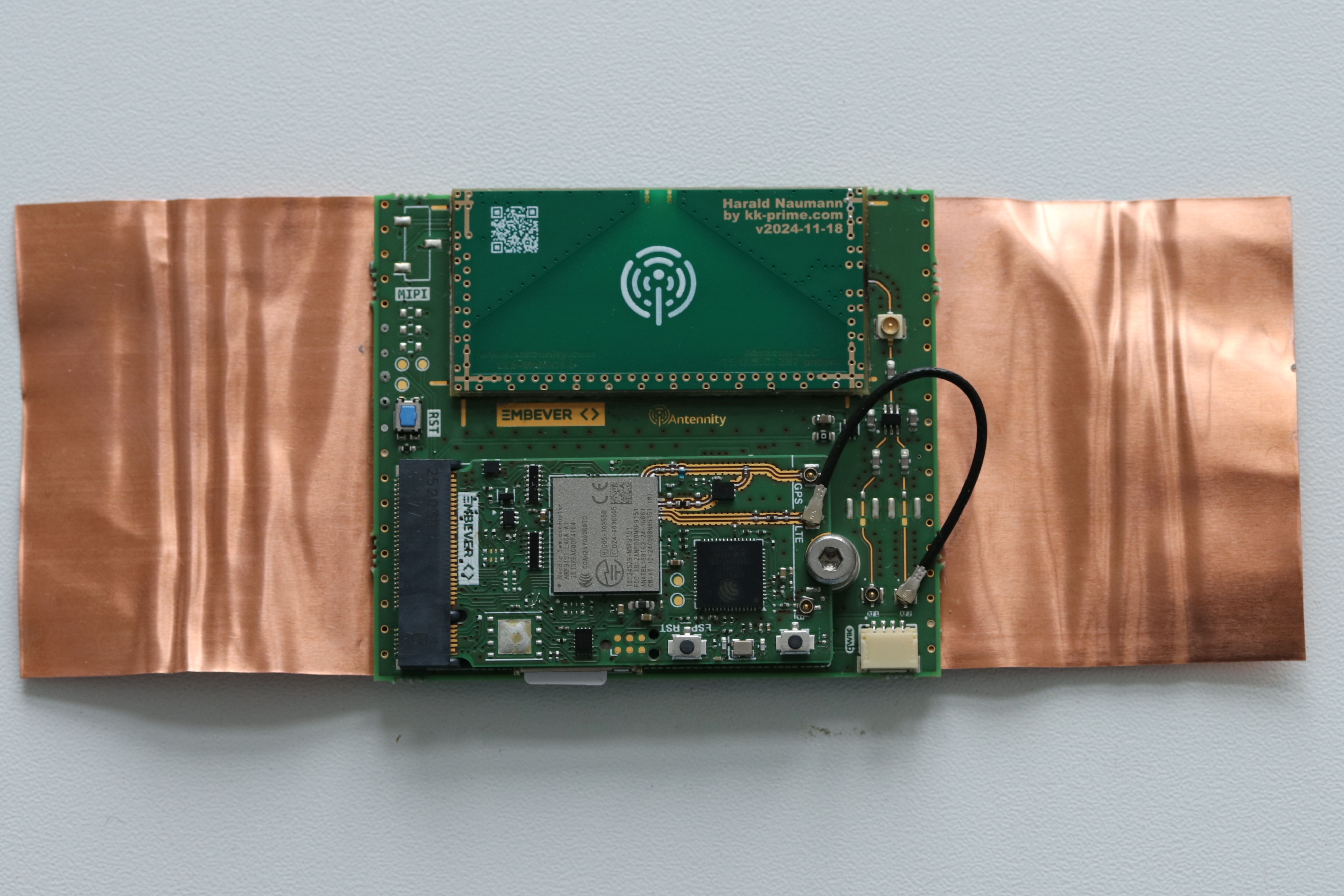
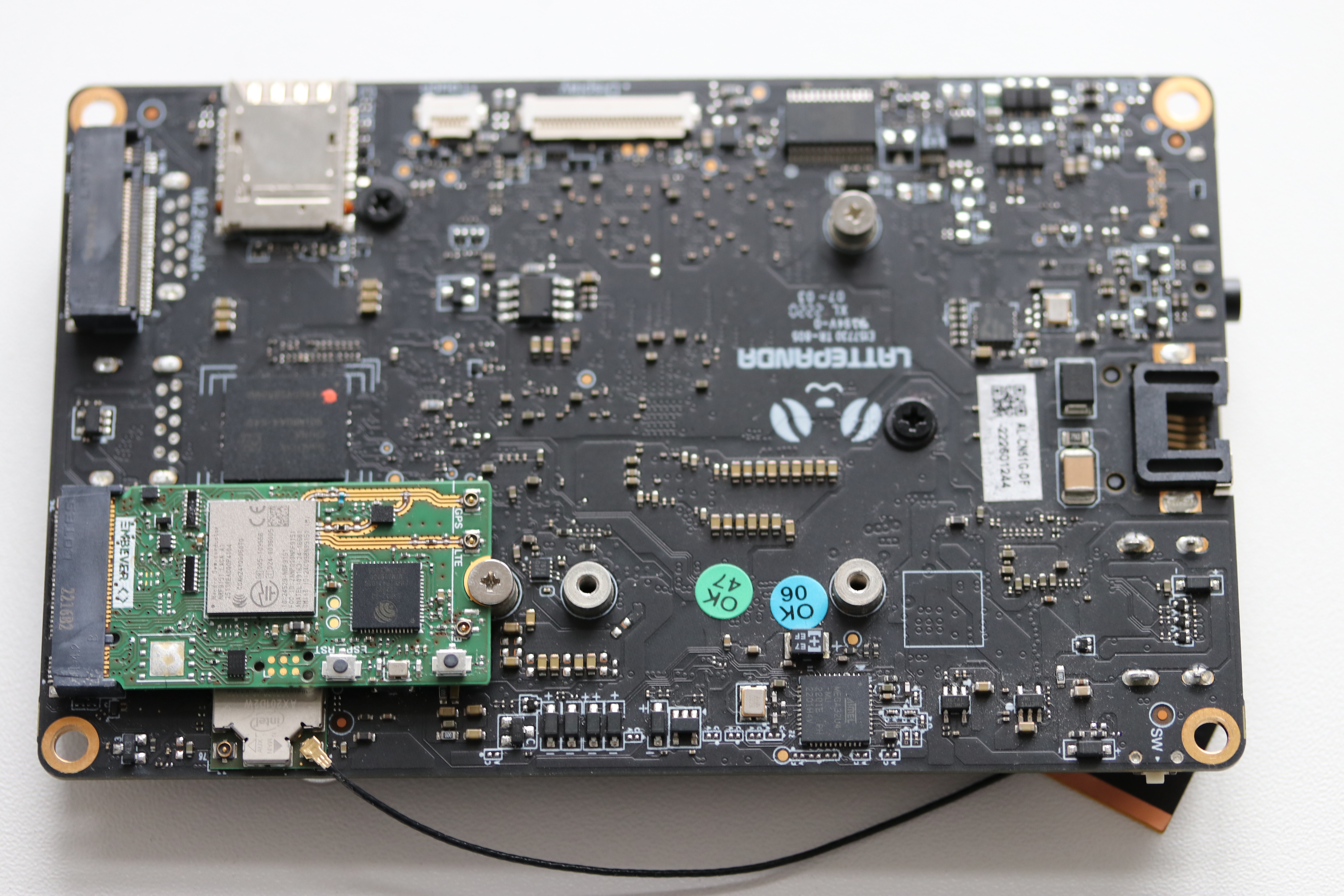
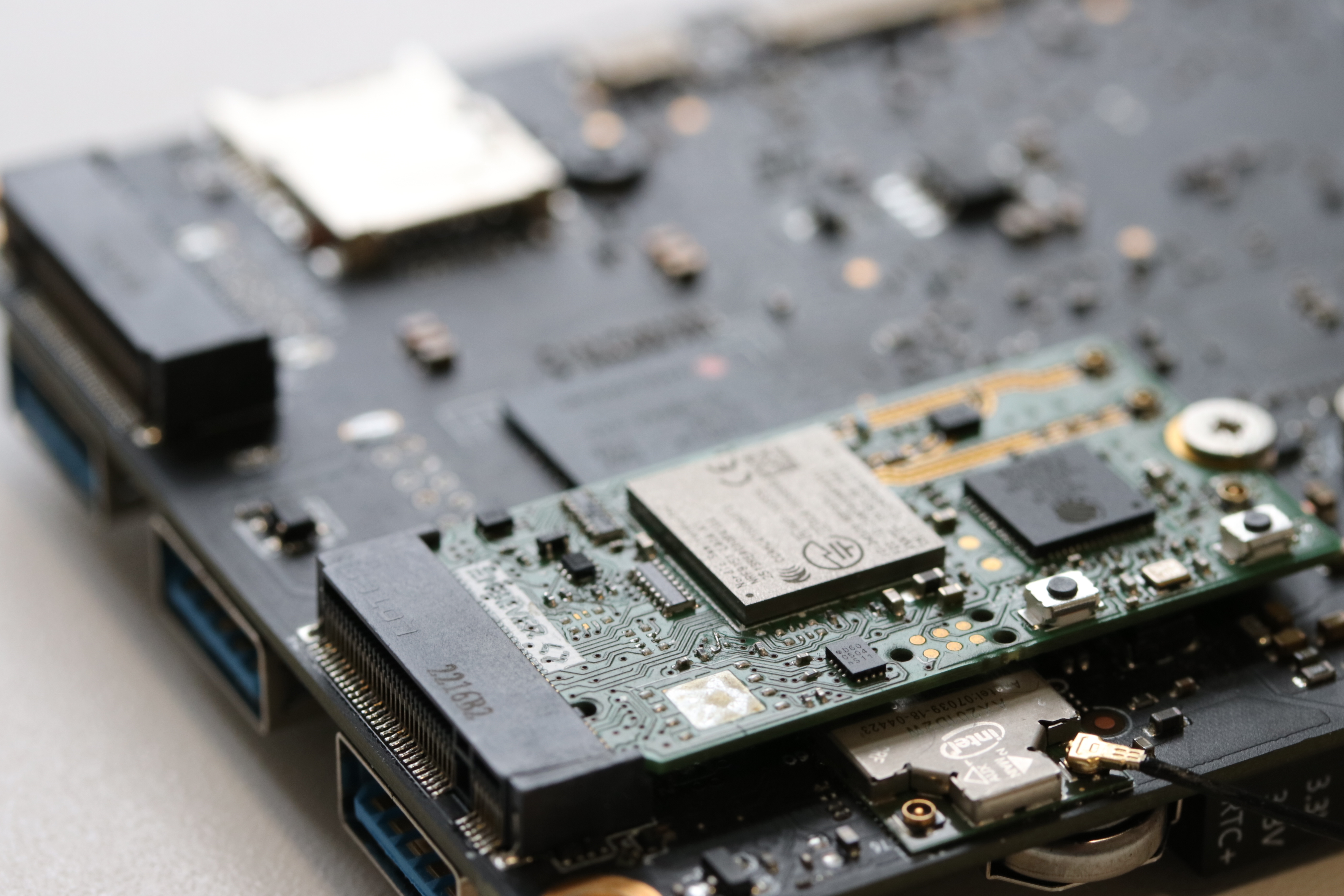
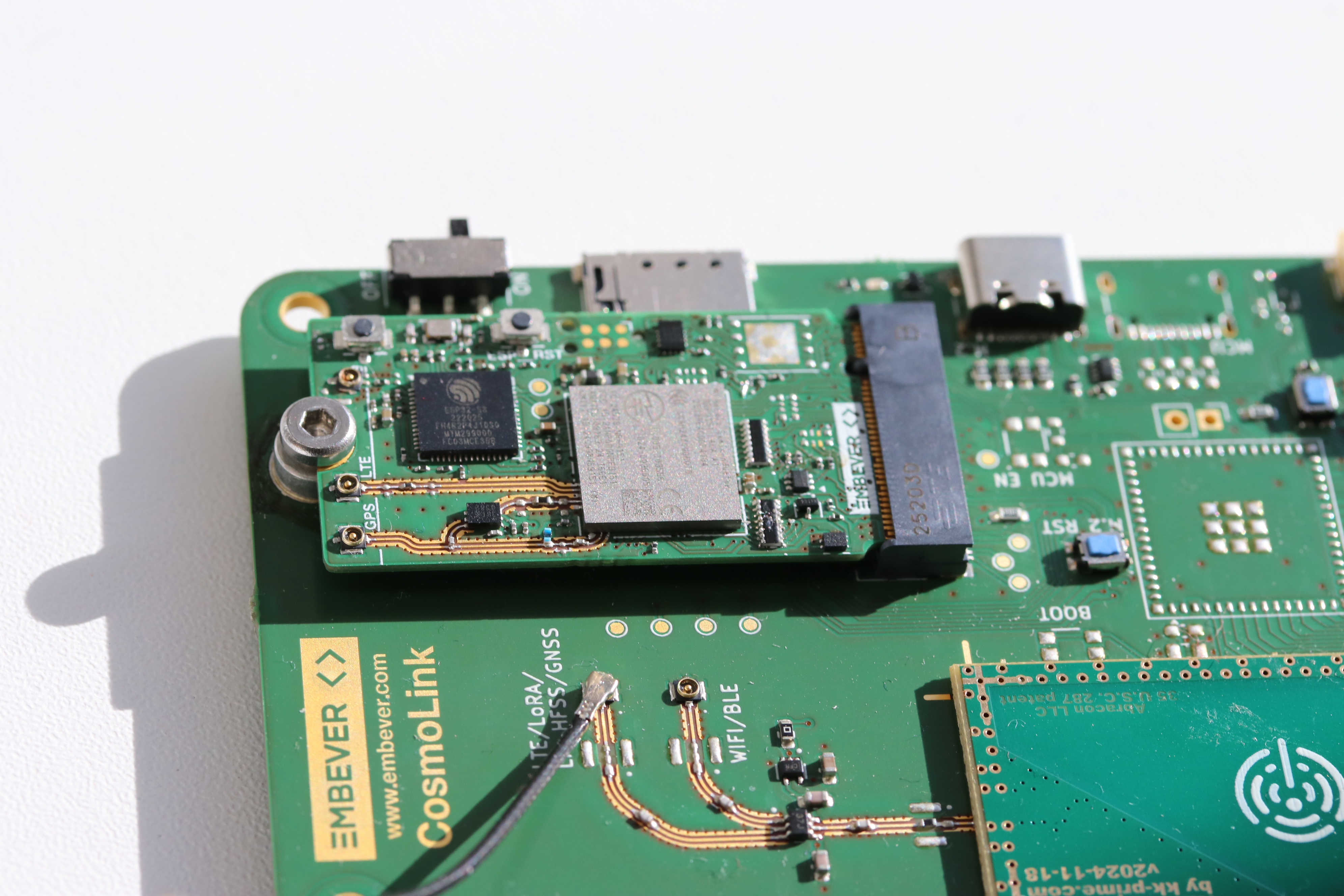
System Architecture Overview
CaaM.2-nRF9151 integrates two microcontrollers on a single M.2 module, each serving a distinct role within the system architecture:
- Nordic Semiconductor nRF9151
- Cellular modem and GNSS controller
- AT command interface or main controller firmware
- Espressif ESP32-S3FH4R2
- USB interface, Wi-Fi and Bluetooth LE controller
Depending on firmware configuration, the ESP32-S3 can operate in one of the following modes:
- USB-to-UART bridge
- The ESP32-S3 presents itself as a USB device and forwards data to the nRF9151 over UART.
- This mode is typically used for:
- Modem control
- Debugging
- Firmware flashing of the nRF9151
- Standalone application MCU The ESP32-S3 runs the main application firmware and communicates with the nRF9151 as a coprocessor.
The ESP32-S3 is connected to the nRF9151 via both UART and SWD interfaces.
- UART is used for runtime communication and control.
- SWD (Serial Wire Debug) allows the ESP32-S3 to flash firmware to the nRF9151 and perform low-level debugging operations.
Board Variants
CaaM.2-nRF9151 is available in two variants. The functional difference between the two variants is defined by the population of resistor arrays on the board.
M.2 Compliant Variant
Populated with fewer resistor arrays.M.2 Non-Compliant Variant
Populated with additional resistor arrays, enabling extended signal routing.
The two variants share the same mechanical form factor, major components, and power architecture.